Turlock, CA · Garage Door Service
How Turlock's Heat and Housing Age Wear Out a Garage Door
Turlock homes built mostly 1945-2000 face spring and opener strain from severe summer heat. Here's what that means for your door and when a repair call is worth it.
- Repairs & new doors
- Springs & openers
- Serving 4 nearby communities
The Problem
Most houses on this side of the valley went up between 1945 and 2000, with the bulk of that stock dating to the 1980s and 90s. That matters because the torsion springs, openers, and track hardware installed during that build-out are now thirty to forty years old, and they weren't speced for the kind of sustained heat this area sees. Severe summer heat doesn't just make the garage uncomfortable - it works on the metal. Steel springs expand and lose a bit of their wind tension every cycle through a hot afternoon, and the lubricant in older openers thins out and runs off the gears faster than it would in a milder climate. Add in slab foundations that shift slightly as the ground dries and cracks each summer, and you get tracks that creep out of alignment year over year. None of this shows up as a dramatic failure at first. It shows up as a door that's a little louder, a spring that looks a little more stretched at the coil ends, an opener that strains for an extra second before it catches. By the time a cable snaps or a spring lets go, the wear has usually been building for a season or two of heat, not a single bad day.
What Local Conditions Do
Severe heat changes how fast three parts fail: springs, openers, and nylon rollers. Torsion springs lose tensile strength as they repeatedly heat and cool through the day, and on a door that's original to a 1980s or 90s build, that spring has already absorbed decades of that cycle. Openers - especially the chain-drive units common in houses from that era - run their motors hotter in a garage that can sit well above outdoor temperature by midafternoon, which shortens gear and capacitor life. Nylon rollers get brittle and crack faster under heat exposure than the steel rollers some newer doors use. None of this is unique to one house; it's the pattern across the 25 or so named areas in this part of the county, because the housing stock and the climate are shared across the whole service area. A door in good shape can handle this for years. A door that's already carrying age from the original 1980s-90s install is the one that starts showing symptoms first.
When to Call Someone
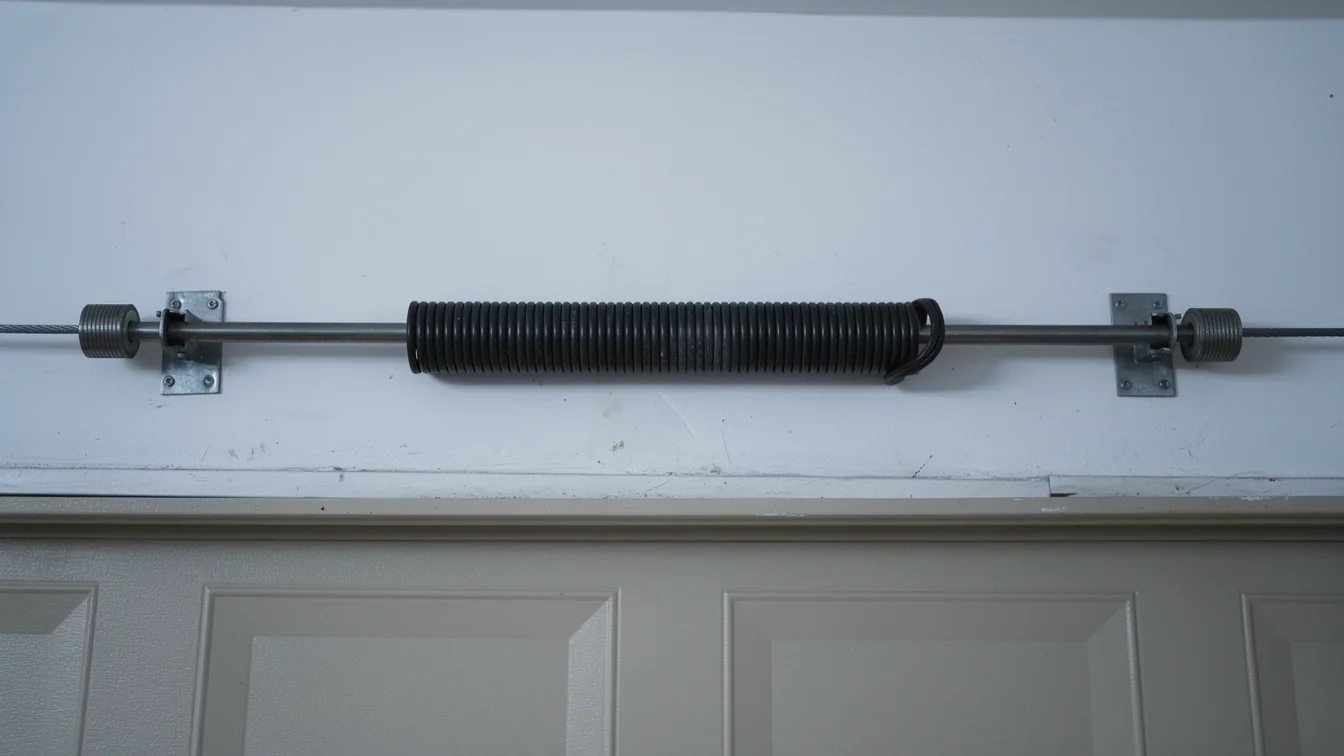
Call before the spring fully goes, not after. If a torsion spring on a door from that 1980s-90s stock is showing a visible gap in the coil, or the door feels heavier to lift by hand than it used to, that's the heat-and-age combination doing its work, and it's cheaper to deal with as a spring swap than as an emergency call after a cable snaps under load. Same goes for an opener that hesitates, reverses without reason, or runs hot to the touch - those are motor and gear symptoms, not one-off glitches, especially in a unit installed in the original build era. With a median household income around $75,751 and most households being owner-occupants rather than renters, a lot of homeowners here are weighing a repair against a replacement on a door that's thirty-plus years old. That's a reasonable question to ask out loud on the call, not something to guess at from a driveway inspection.
The Common Mistake
The mistake we see most is spraying household oil or WD-40 on a spring or track and calling it maintenance. In this heat, that kind of light oil breaks down fast and actually attracts grit, which speeds up wear on rollers and hinges instead of slowing it. The other common one is ignoring a slow, heavy door for months because it still opens - on original 1980s or 90s hardware, a spring that's lost tension under repeated heat cycling doesn't recover, and an opener fighting that extra weight is burning out its gears faster to compensate. One honest limitation: we don't carry every obsolete part for every original-era opener, and on some of the oldest units in this housing stock, replacement is the straight answer rather than a repair - we'll tell you that on the call instead of billing for a fix that won't hold.
Frequently asked questions
Why does my garage door spring feel weaker in summer here?
Torsion springs lose a bit of tension every time they heat and cool, and this area's severe summer heat accelerates that cycle. On a spring that's original to a house built in the 1980s or 90s, decades of that heat exposure add up, which is why older doors often need a spring sooner than the hardware's rated life would suggest.
Is it worth repairing an opener from the 1980s or 90s, or should I replace it?
Depends on the unit and what's failed. Gear and capacitor wear from running hot in summer is common on original-era openers, and once the motor itself is going, repair usually costs close to what a new opener does. We'll look at the specific unit on the call rather than guess from age alone.
How often should I check my door given the heat here?
A quick look at the spring coils and a listen for new noise once a season, especially heading into summer, catches most of what heat-driven wear causes. If the door's gotten noticeably heavier to lift by hand, that's worth a call rather than waiting.
Do you serve areas outside Turlock itself?
Yes, we work across this part of the county, including towns like Denair, Keyes, Hughson, and Delhi nearby, along with the wider service area out to places like Oakdale and Atwater.
Related garage door services in Turlock
More garage door guides
Book garage door service in Turlock
Call now or request a quote - tell us what the door is doing and where you are.