
Turlock, CA · Garage Door Service
Weather Seals and Drafts in Turlock Garage Doors
Why Turlock's 1980s-era garage doors leak heat and let in drafts, what the severe heat band does to seals, and when to call Turlock Garage Door Pros.
- Repairs & new doors
- Springs & openers
- Serving 4 nearby communities
The Problem
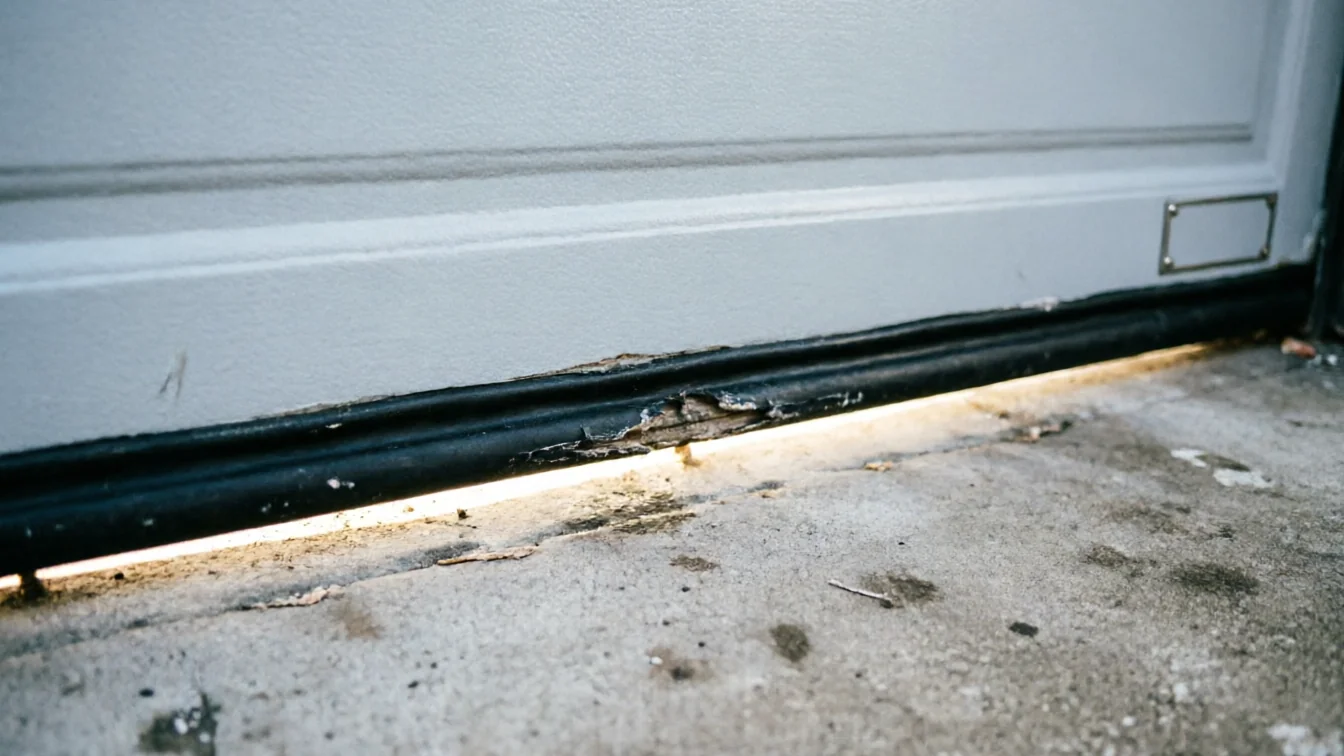
Most of the garage doors we open up around Turlock came in with houses built somewhere between 1945 and 2000, and the median build year lands around 1987. That means the bottom seal and the side weather stop on a huge share of doors in town are original or close to it, sized to a rubber compound that was never built to last forty years. The seal goes stiff, cracks at the corners, and pulls away from the slab. You get a gap you can see daylight through, usually right under the bottom panel where the floor isn't perfectly flat anyway. Owners call it a draft. It's actually a seal that's outlived its rubber. On a lot of these 1980s and 90s doors, the track and roller setup hasn't been touched since install either, so the door doesn't sit square on the seal even when the seal itself is fine. That combination - old rubber, old hardware, a slab that's settled a bit over three or four decades - is what's behind most of the gaps we find, not a design flaw in the door itself.
What Local Conditions Do
Turlock sits in a climate band we classify as severe heat, and that matters more to a garage door seal than people expect. Rubber and vinyl weather seal degrades fastest under repeated heat-cycling, not cold. The seal bakes during the day, contracts overnight, and that expansion-contraction cycle, repeated for years, is what cracks it and pulls it loose from the track it sits in. A door built in the 1980s or 90s, with a seal that's already decades past its intended life, is further along that cracking curve than a newer door would be. The same heat also warps thinner steel panels over time, especially on the sun-facing side of a garage, which opens a second gap at the panel seam that has nothing to do with the bottom seal at all. So when a homeowner tells us they've got a draft, we're checking two separate things: the bottom and side seal, and whether the panel itself has bowed enough to break contact with the frame.
When to Call Someone
If you can see daylight at the bottom corners of the door, or you feel moving air along the sides when the door's shut, that's worth a look - not an emergency, but not something that fixes itself either. A seal replacement is a straightforward job on its own. Where it gets more involved is if the door's also dragging, binding on the track, or the opener is straining to close it the last few inches; that usually means the gap isn't just the seal, it's the door not sitting square anymore, which often comes back to track or roller wear on a decades-old setup. If your house falls into that 1945-2000 build range that covers most of this area, and the door hasn't had the hardware serviced, a seal swap by itself may only buy you a year or two before the same gap reopens.
The Common Mistake
The mistake we see most is people buying a universal weather seal strip and pressing it into a track that's worn oval instead of U-shaped, then wondering why it pops out again within a season. On a door this old, the track groove itself has usually widened from thousands of open-close cycles, and a seal that fits a new track won't hold in one that's worn. We'll say plainly: if the track's gone, a new seal is a temporary patch, not a fix, and we'd rather tell a homeowner that upfront than sell a strip that's back on the garage floor in six weeks. Sometimes the honest call is to replace the bottom section of track along with the seal, and sometimes, if the door's old enough and the panel's already warping from heat, replacing the door is the better money. We'll tell you which one you're looking at before we quote anything.
Frequently asked questions
Why does my garage door let in a draft even though the seal looks fine?
On houses built in the 1980s or 90s, which covers a lot of Turlock, the panel itself can warp slightly from repeated heat exposure on the sun-facing side. That bows the door just enough to break contact with the frame at the seam, even when the bottom seal is in decent shape. It's a panel issue, not a seal issue, and the fix is different.
How often should I expect to replace the weather seal in this climate?
We don't have a hard number to give you without seeing the door, but the severe heat cycling here breaks down seal rubber faster than it would in a milder climate, so a seal on an older Turlock door is usually further along in cracking than its age alone would suggest.
Is a new weather seal enough to stop the draft for good?
Sometimes. If the track is still U-shaped and holding its groove, a seal swap works. If the track's worn oval from age, the new seal won't seat properly and you'll be back where you started within months. We check the track before we recommend just the seal.
Related garage door services in Turlock
More garage door guides
Book garage door service in Turlock
Call now or request a quote - tell us what the door is doing and where you are.