
Turlock, CA · Garage Door Service
What We Actually Check When We Come Out to Your Door
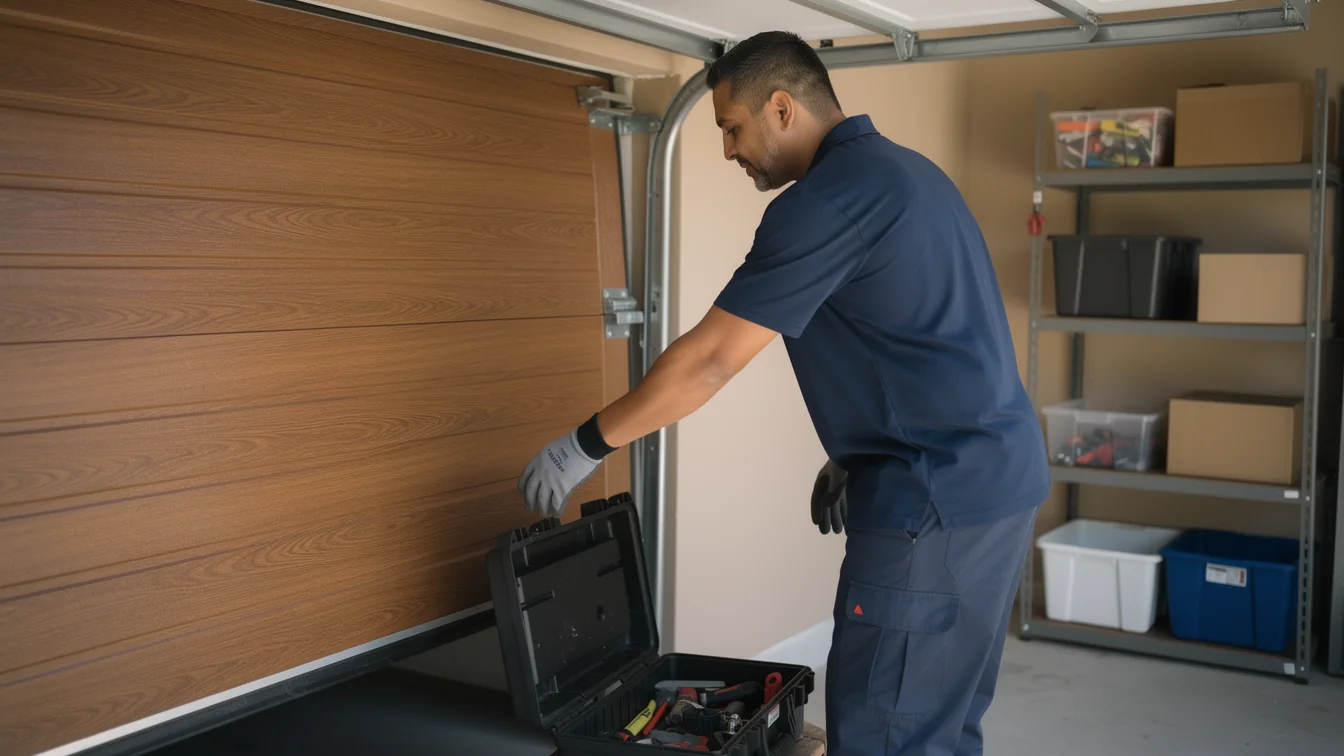
A straight look at what Turlock Garage Door Pros checks on a service call, built around this town's 1980s-90s housing stock and severe heat.
- Repairs & new doors
- Springs & openers
- Serving 4 nearby communities
The Problem
Most calls we get in Turlock aren't mysterious. A door that worked fine last summer starts dragging, a remote stops reaching the opener, or a spring lets go with a bang. The reason it feels sudden is that the parts underneath wear slowly and then fail all at once. With median housing in this area built around 1987, and most of the stock dating from the 1980s and 90s across the 25 neighborhoods we work in, a lot of doors are running original or first-replacement hardware that's now thirty-plus years old. Torsion springs rated for a certain number of cycles don't care what year it is on the calendar - they care how many times the door has gone up and down, and three decades of that adds up. The problem isn't that your door is broken today. It's that nothing on it is new, and heat and age work on steel and nylon the same way, just slower than you notice until the day you don't.
What Local Conditions Do
Turlock sits in a severe heat band, and that matters more to a garage door than most people think. Steel tracks expand under heat and contract at night, and over enough summers that cycle loosens the bolts holding brackets to the jamb. Nylon rollers - common on doors installed through the 80s and 90s stock we see across this service area - get brittle faster in sustained high heat, and a brittle roller cracks instead of wearing smooth. Opener circuit boards and logic units also run hotter inside an attached garage that bakes all afternoon, which shortens the life of the board well below what the same part would see in a mild climate. None of this shows up as a single dramatic failure. It shows up as a door that's a little noisier every summer, a remote with a shorter range than it used to have, and a spring that finally gives out mid-cycle instead of gracefully retiring.
When to Call Someone
Call before the door strands your car inside, not after. If you've got a door original to a house built in the late 80s or early 90s and it's never had the springs replaced, that's worth a look regardless of how it's running today - torsion springs have a cycle life, and houses in this bracket are well past the point where the first set would still be factory-fresh. Same goes for openers: a unit that's run through enough Turlock summers to show heat stress on the circuit board is a unit worth checking before it fails on the hottest day of the year, which is exactly when it will. If the door is slamming the last six inches instead of settling, or the opener reverses for no reason, those are both signs of a spring or sensor giving up, not something to wait out.
The Common Mistake
The mistake we see most is treating a noisy door as cosmetic. Owners spray some lubricant on the track, the noise quiets down for a week, and they move on - but lubricant doesn't fix a roller that's gone brittle from heat cycling or a bracket that's worked loose from thirty summers of expansion and contraction. It buys time, not a fix. The honest limit here: we don't recommend replacing a whole door system just because it's old if the springs, rollers, and opener are still within spec - a full teardown on a door that only needs two rollers and a tune is money you didn't need to spend. A service call should tell you which of those it actually is, not sell you the bigger job by default.
Frequently asked questions
How old does a door have to be before the springs are a concern?
It's about cycles, not just age, but with most Turlock houses built between 1945 and 2000 and a median around 1987, a lot of original springs are well past their rated cycle count. If yours has never been replaced, it's worth having it checked rather than waiting for it to snap.
Does the heat here actually affect the opener itself?
Yes. Turlock's climate band is rated severe heat, and an attached garage can run hotter than the outside air most summer afternoons. That heat shortens the working life of circuit boards and logic units faster than it would in a milder climate.
Will a service call always end with a recommendation to replace parts?
No. If the springs, rollers, and opener are within spec, we'll say so. We don't push a bigger job on a door that just needs a couple of rollers and an adjustment.
What's the one thing you can't fix on the same visit?
Parts that need to be special-ordered - certain opener boards or less common spring sizes - aren't always on the truck. We'll tell you upfront if that's the case rather than make you wait around for a part that isn't there.
Related garage door services in Turlock
More garage door guides
Book garage door service in Turlock
Call now or request a quote - tell us what the door is doing and where you are.